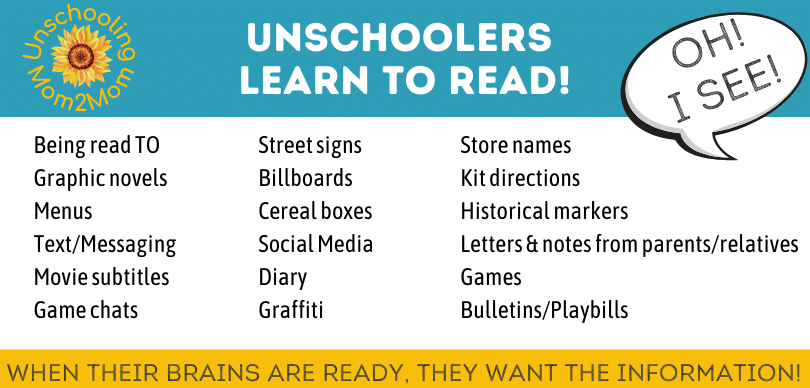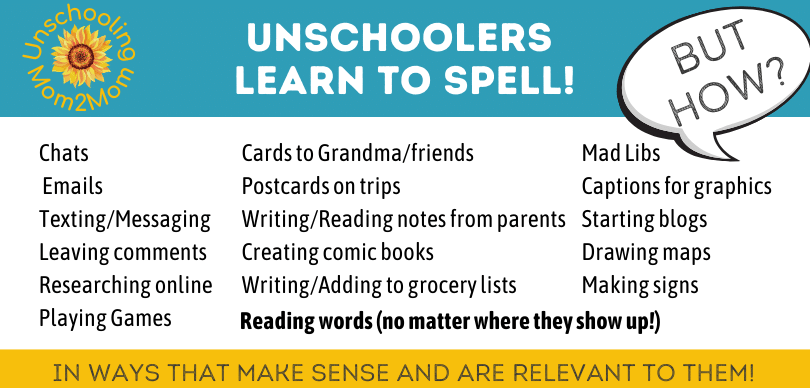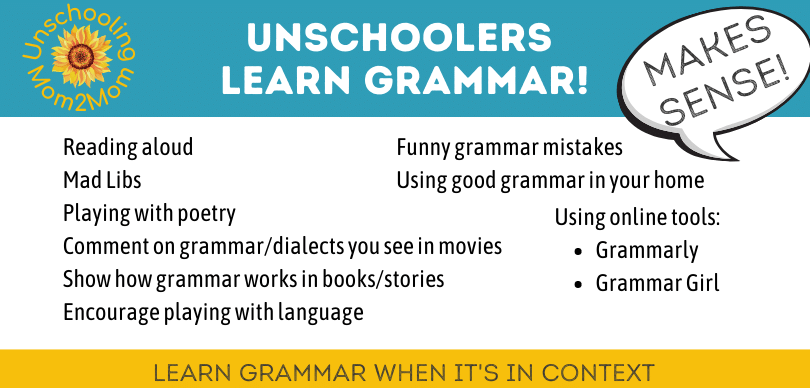
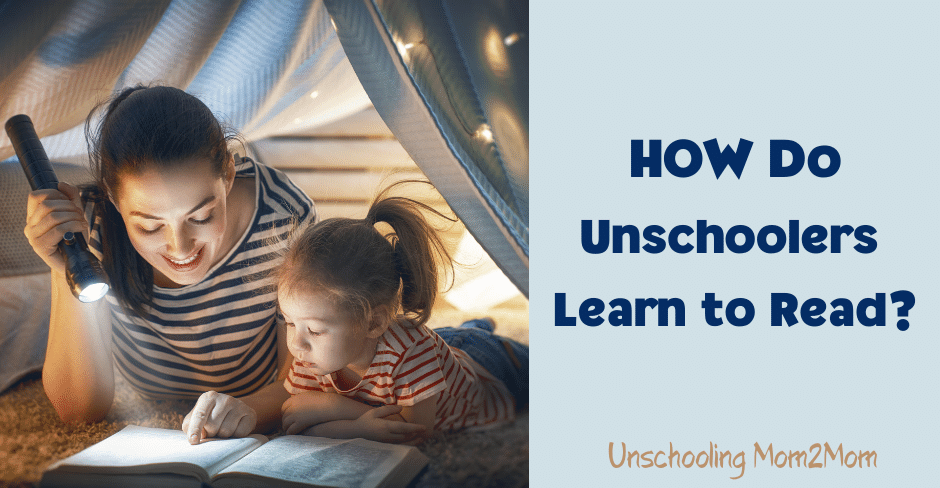
How DO Unschoolers Learn to Read?

Sue Patterson

Updated 11/2025

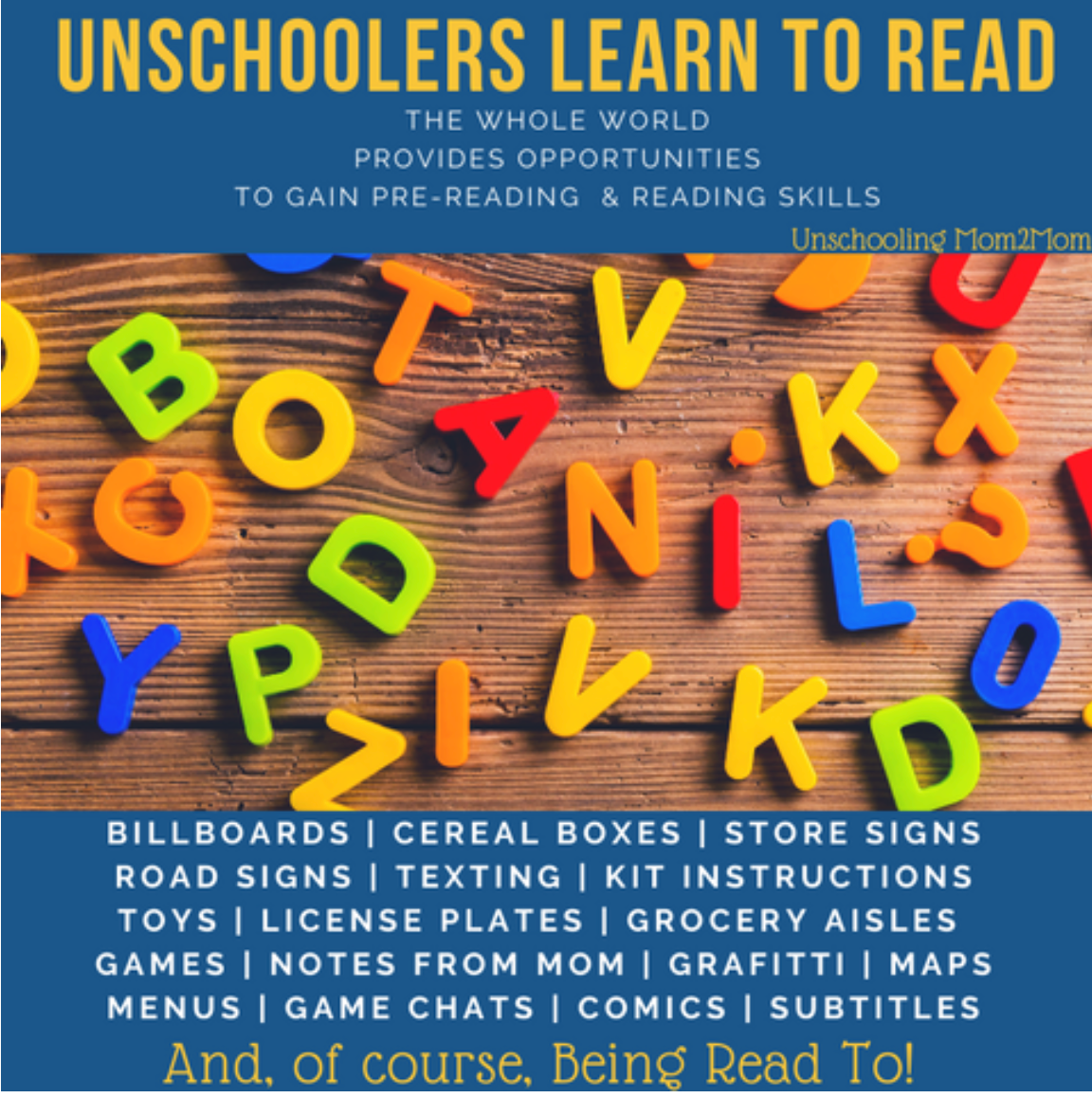
Many parents are shocked to discover that kids really don't need a lot of teacher-driven, meticulously planned out curriculum in order to learn to read.

Kids learn this skill in much the same way they learned how to walk and talk and eat: they live in an environment that supported that skill being developed and, when their brain was ready, they did it.

Read about Reading

This curated collection of articles, videos and podcasts shares explanations of how unschoolers do learn to read.
https://www.unschoolingmom2mom.com/learning-to-read/

A few point to remember:

  • Children learn to read at all different ages - they are neither behind nor ahead of anyone else. No race or competition exists when they are no longer in a school setting. Children are exactly where their brain needs them to be.

  • Reading, from an unschooling perspective, is not the Holy Grail it is in school. Kids *are* left behind if they reach about 4th grade and still cannot read fluently. That’s because the teaching mode changes to cover more material. But in a home, there’s no need to worry about that. No “teaching mode” exists that has to be accommodated. Learning can continue as it always has, and pivot when it's clearly ready to.

  • The GOAL of Reading is to bring information to the learner. But if the Learner can gather information in a different way, a way that matches their preferences and even brain development, then the goal is simply met through a different vehicle. Reading isn’t the only way. Schools preoccupation with reading is a throwback to an antiquated system where that was the only way for information to be shared.

  • Some people’s learning styles fit other ways to gather information. Everyone really doesn’t have to be a great reader or enjoy reading to be a voracious LEARNER.

  • Notice if you’ve adopted the school’s attitude that “good readers are The Smart Kids.”  Sometimes our fears about when our own kids are learning to read, are tied to this. Research shows that early reading is not an indicator of intelligence. The Terman study shows that early reading did not reliably boost lifelong educational attainment in that sample.
    (
    Read the Research)
    Children learning to read later catch up to children reading earlier

  • Be aware that society places tremendous pressure on you as the parent - but also on your child as the Learner - to get Reading figured out. Still, even if a child wants to learn to read, sometimes their brain isn’t cognitively ready. Parents can still play with many pre-reading activities and can dismiss naysayers with “Yes, we are working on it,” without judgment or shame.

  • Quality, context, and broader skills matter. The book‐reading study shows that richness of language, parent-child interactions, and controlling for SES matter. That means simply “child can read independently at age 4” doesn’t tell the whole story.

  • Focus on broader literacies and self‐directed learning. Since early reading is not the sole driver, fostering love of reading, oral language, rich talk, motivation to read, self-regulation, and numeracy or problem-solving skills matters just as much or more.


  • Literacy is best used as a tool rather than a benchmark.  It's the path TO the information, not the end goal itself. Schools have gotten the horse before the cart, because the system required it. We can focus on building environments rich in literacy, numeracy, play, motivation, curiosity, and self-direction.

Ready to find out more?

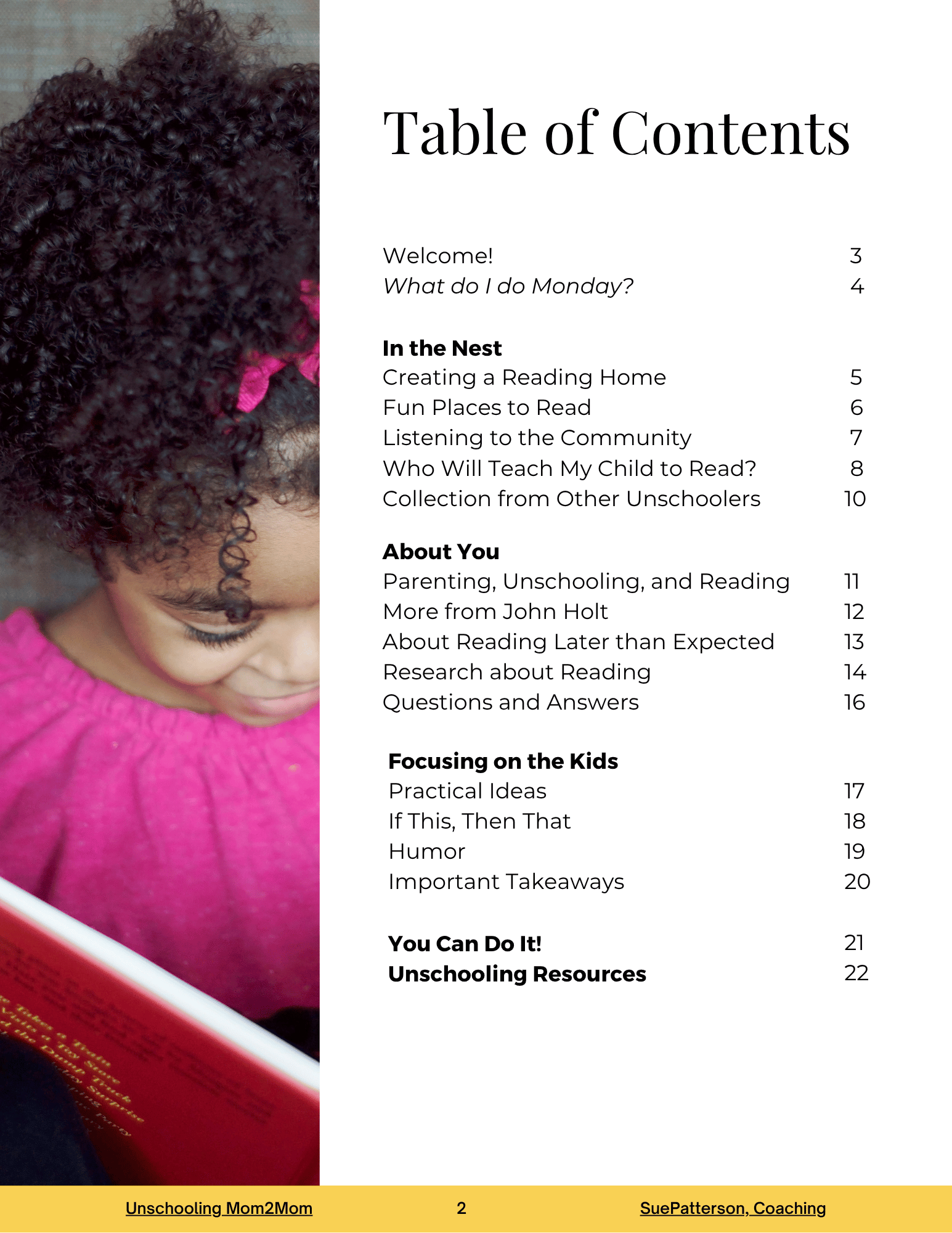
This Guide WILL Help You!

If you're worried about how your child is going to learn how to read without curriculum, this full color 22-page mini-magazine is what you're looking for.

  • Learn how to create a literate environment within your home.
  • Conquer your own fears about how unschooling works with reading
  • Read cutting edge research about how kids  actually  learn to read
  • Discover SO MANY practical tips to make learning how to read a smooth process for your child
Inspiration     |    Tips    |   Guidance

Get this Guide!

"Unschoolers are successful at helping kids learn to read  because they spend so much time in what schools call the 'pre-reading' stages! 


Unschooling families are in no rush and have no reason to make kids (who aren't ready) keep up! It's all so much easier to wait until they ARE ready."

By Sue Patterson May 26, 2026
What my trip to France reminds me about structure....
Homeschooling vs Unschooling - what's the difference?
By Sue Patterson May 22, 2026
Unschooling vs homeschooling can feel very different day to day. Here’s why, what changes in real life, and how each approach shapes your child’s learning.
How Do You Know Your Child Is Learning Without Curriculum?
By Sue Patterson May 20, 2026
How do you know your child is learning without curriculum? Learn what to look for, how unschooling assessment works, and how progress shows up over time.
What to say to the kids if they feel behind - mom on couch with teen talking
By Sue Patterson May 18, 2026
Wondering what to say to your child if they feel they are behind? Understand typical reactions as well as the do's and don't of how to handle the situation.
Life skills Kids REALLY Need
By Sue Patterson May 18, 2026
Parents worry about grades, gaps, screen time. Let's discuss what prepares kids for adult life through unschooling / homeschooling: adaptability, problem-solving, confidence.
Do Unschoolers fall behind? Nervous mom  & nervous kid
By Sue Patterson May 14, 2026
Are unschoolers behind academically? Understand how learning works without grade levels or curriculum, and how to tell if your child is progressing over time.
Small plants above ground -  big root system underneath
By Sue Patterson May 11, 2026
Does unschooling feel like nothing is happening? Here’s why it can look lazy, what’s actually going on, and how to start trusting the process.
2 families with children - what does an Unschooling Day look like? Real examples by age
By Sue Patterson May 5, 2026
Curious what an unschooling day looks like? See real-life examples by age, understand why it feels unstructured, and how learning happens without a set schedule.
The Mother's Day Fairy - doorbell
By Sue Patterson May 4, 2026
Is it time for the Mother's Day Fairy to come to your house? What? You don't know about her? Let me explain...
Sue Patterson  Unschooling Podcast Is Unschooling Really Enough
By Sue Patterson April 28, 2026
Wondering what unschooling looks like on a typical day? Learn how real-life learning shows up, why it can feel unstructured, and how to know your child is actually learning.
More Posts