Deschooling
Unlearning the formal educational systems
What is deschooling?
Deschooling is the process of helping parents and children let go of school-based thinking after leaving traditional education. This allows learning to happen naturally in everyday life.
Parents need deschooling as they are setting aside many ideas from their own formal schooling and years in school culture.
Children who are switching from structured education to curiosity-led learning will also need to deschool.
10 Signs You Might Need Deschooling
Common patterns often show up when school-based thinking hasn’t fully loosened its grip.
- You feel anxious when a day doesn’t look “productive.”
If learning only feels real when boxes are checked or work is visible, school conditioning is likely still running the show. - You catch yourself trying to recreate school at home—without meaning to.
Schedules, lesson plans, subjects by the hour, or worrying about “falling behind” can sneak back in even when you don’t want them to. - You need constant proof that learning is happening.
If you feel uneasy unless you can see worksheets, outputs, or measurable results, deschooling can help shift how you recognize learning.
- You feel guilty when your child learns through play, screens, or conversation.
Enjoyable or informal learning may still feel “not enough” because it doesn’t resemble school. - You compare your child to grade levels or peers—even when you know better.
Thinking in terms of “should be by now” is a strong signal that school timelines haven’t fully loosened their grip. - You feel pressure to stay one step ahead of your child.
The belief that you must teach, direct, or prepare everything often comes from a school-based model of learning. - You’re afraid of gaps—even when nothing is actually wrong.
Worrying about what might be missing rather than what’s unfolding right now is a common deschooling indicator. - You feel responsible for making learning happen.
If it feels like learning depends entirely on your planning, effort, or follow-through, deschooling helps reframe your role. - You struggle to trust interest-led or real-life learning.
Even when it’s working, you may still question whether it “counts.” - You’re exhausted—but can’t imagine letting go.
Wanting relief while also fearing what happens if you stop managing everything is one of the clearest signs deschooling would help.
Why do I need deschooling?
Deschooling is a necessary decompression time for your family to reset your bodies, minds, and outlooks and relax your way into unschooling. Take the time to evaluate your ingrained expectations about academic achievements and how that can change to be present with your child. Enjoy playtime, getting to know what fascinates your kids, and their learning style to set a foundation for unschooling success.
*Expect to revisit Deschooling as your child gets older and expectations shift.
It's all part of the process.
How Do I Deschool?
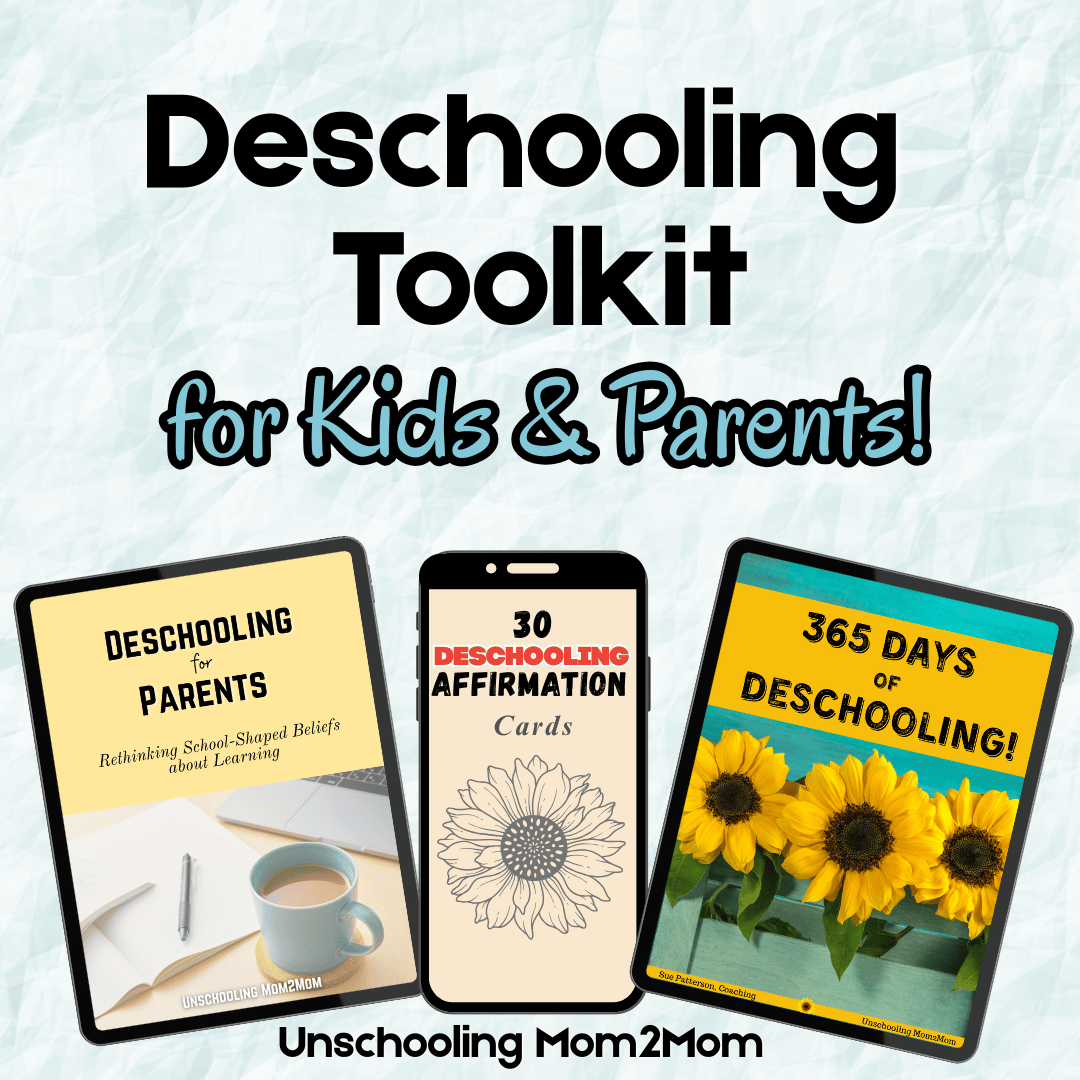
- Learn More about Deschooling. Read Unschooling Mom2Mom blogposts and PDFs listed below.
- Observe and Listen more to your children. You'll see learning happening without having to force anything.
- Talk with Other Unschooling Parents. Get support from others on this path. Private and Group Coaching.
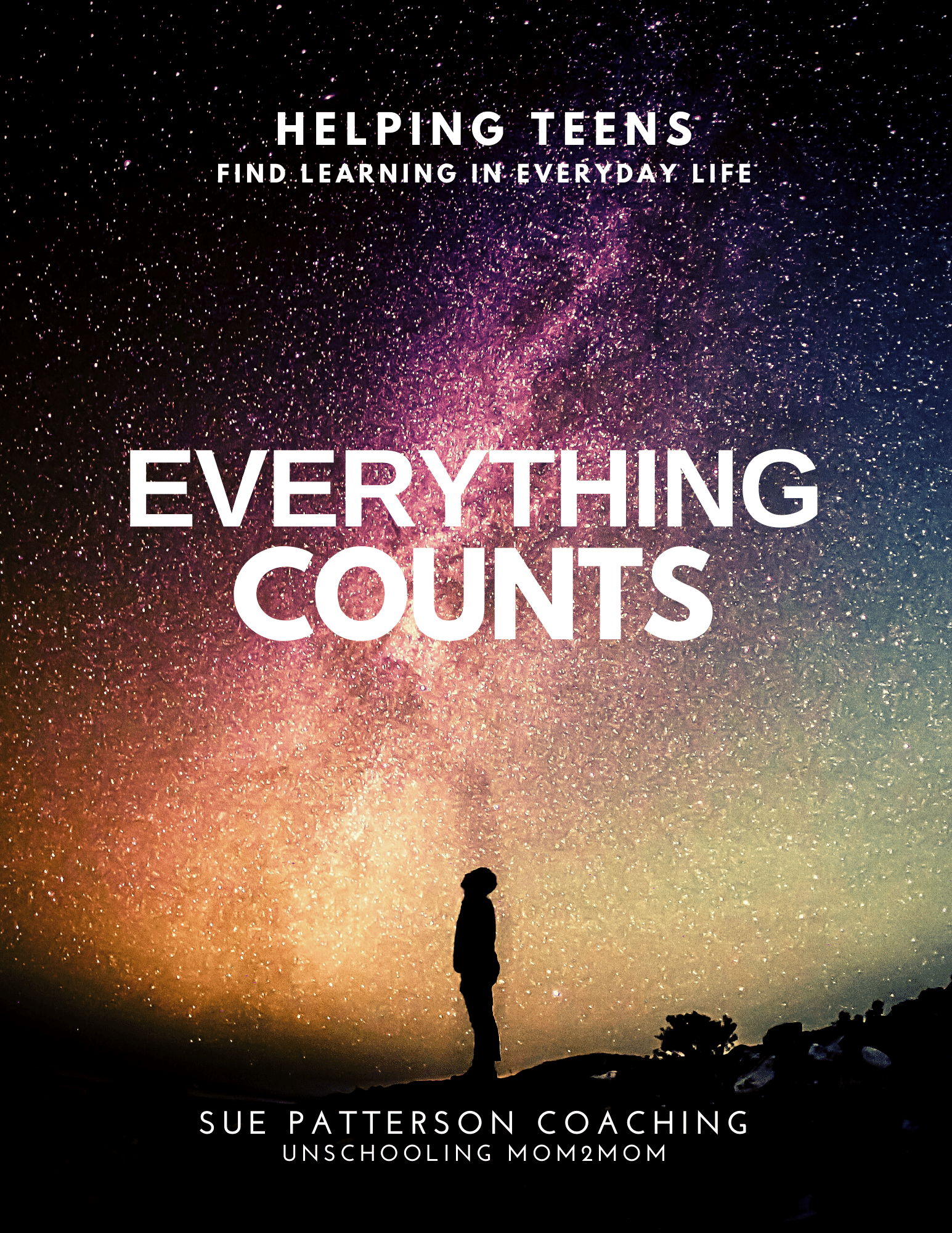
Deschooling Resources:
Common Deschooling Questions
What is deschooling?
Deschooling is the ongoing process of noticing and loosening expectations about learning that no longer serve your family after leaving traditional school. It's the process of shifting focus away from what makes a school system run smoothly and toward what works best for an individual learner.
How is deschooling different from homeschooling and unschooling?
Deschooling is mindset work, helping parents and children see learning beyond how they learned in school.
Homeschooling and unschooling describe different ways learning can happen at home.
Is deschooling just for new homeschoolers or unschoolers?
No. Many families revisit deschooling years into homeschooling or unschooling, especially during transitions or when learning begins to look different. Deschooling isn’t about how long you’ve been doing this—it’s about responding to changes.
Is deschooling about letting kids do whatever they want until this time period is over?
No. Deschooling isn’t about removing all boundaries or a waiting out a phase. It’s about shifting how parents interpret learning, so decisions are guided by understanding rather than urgency or school-based expectations.
Does deschooling ever end?
Unfortunately, no. As kids get older, expectations change and familiar worries resurface. When parents see their fears returning, they can return to the deschooling resources for this new phase of parenting their child as they mature.
Read:
Deschooling - for HOW long?
Do I have to unschool in order to deschool?
No. Deschooling isn’t about choosing a learning style. It’s about examining expectations shaped by school and deciding what still fits your family. Parents can deschool while homeschooling, unschooling, or somewhere in between.
Why does deschooling feel harder as kids get older?
As children grow, learning often becomes less visible and more independent. New stages can trigger old concerns about progress, gaps, or readiness—even when learning is still happening. That’s often a sign it’s time to revisit deschooling.
What does deschooling look like in daily life?
Deschooling doesn’t usually change what children are doing as much as how parents interpret it. It often shows up as noticing learning in everyday activities, loosening timelines, and responding with curiosity instead of urgency.
How do I know when we're done deschooling?
You’re not watching for a finish line. When school-based worries fade into the background and decisions are guided more by the individual learner than by school-style expectations, you will have naturally left the deschooling phase.

Read More about Deschooling
Most blogposts also have a podcast too!